


A hybrid piano incorporates acoustic and digital piano elements. It combines the weighted key action and physical hammers of an acoustic instrument with digital sound generation and a speaker system. This fusion reproduces the natural feel of an acoustic piano with the added digital convenience.
While a fully digital piano uses purely electronic tone generation, hybrid pianos use full pivot keys and hammer mechanisms. This allows hybrids to capture subtle playing nuances while also allowing for quiet practice through headphones. This makes them ideal for urban or apartment living spaces.
Hybrid pianos come in several different forms as manufacturers are constantly innovating with new sound generation ideas. Some are fully acoustic pianos that include a silent function, allowing you to control the volume output. Others feature real acoustic piano actions that are used to trigger a digital sound.
How Do Hybrid Pianos Work?
The main component of a hybrid piano is its acoustic-style key action. Each key operates through a hammer system similar to a standard piano, but instead of striking strings, the movement is detected by high-resolution optical sensors. Kawai pianos use an enhanced Millennium III Hybrid Action that incorporates ABS-Carbon fibre. This design results in a more sensitive action that generates more power with less effort overall.
The sensors then translate your touch, speed, and dynamics into digital data and send it to the piano’s sound engine. The piano then plays back multi-sampled recordings of acoustic pianos through the speakers or headphones. These samples are shaped with resonance modelling to reproduce damper, string, and cabinet acoustics. The final piano sound is both rich in natural acoustic character and dynamically responsive to the player.
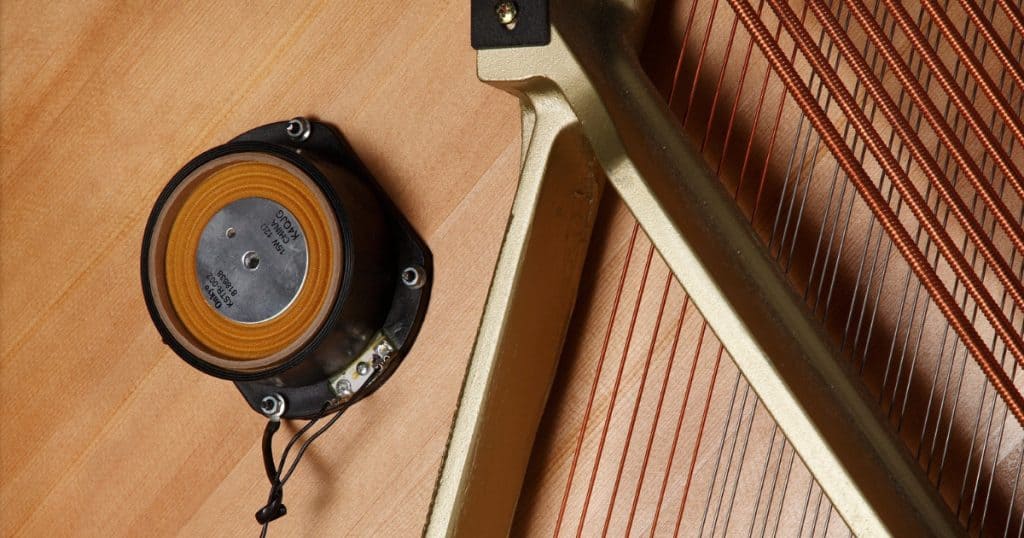
Most hybrid pianos don’t have strings. However, some are designed with strings and digital features built in. These are sometimes called silent pianos. They work by using transducers strategically placed onto the piano’s soundboard to channel the naturally acoustic tone into digitally generated sound through the speakers. This allows them to be played silently with headphones or through their acoustic soundboard.
Benefits of Hybrid Pianos:
Here are a few of the reasons why hybrid pianos are a popular choice:
- Authentic Acoustic Action: Real hammer and mechanisms replicate an acoustic feel.
- Volume Control: Speaker volume can be adjusted, or you can use headphones to quietly play.
- Low Maintenance: Stringless models don’t require regular tuning.
- Compact Design: Offers a grand piano touch and tone in an upright’s compact size.
- Connectivity: Bluetooth, USB and MIDI connectivity.
Do Hybrid Pianos Need Tuning?
No, in most cases hybrid pianos don’t need tuning as there are no strings. The pitch is digitally produced, meaning your piano is always in tune. Some regulation and mechanical servicing are still required for the action every few years. However, it does depend on the model. For example, the Kawai AURES series is a traditional piano with a digital piano built in, so the piano still needs tuning to maintain the acoustic elements.
Need Help Choosing a Hybrid Piano?
There are so many options when it comes to hybrid pianos. Choosing the right model requires careful consideration of your playing needs and preferences. Snadens Pianos offers a range of hybrid pianos, each with a different set of features. Visit our showroom to test models side by side. We can help you find the best piano to suit your musical needs.