

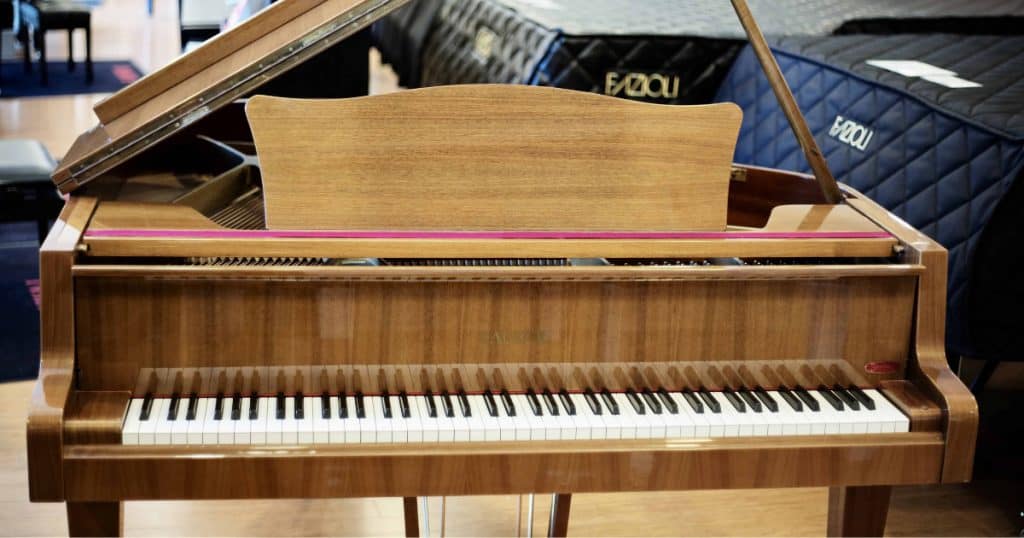
Buying a used piano can be a smart way to get a quality instrument without paying the price for a new one. However, pianos are complex instruments with thousands of working parts. If well-maintained (tuned and serviced), it can continue to function well, but its condition can affect the sound, longevity and repair costs down the line.
In this guide, we offer our tips for what to look for when shopping for a second-hand piano. We go over the things to look out for and how to inspect the key parts of the instrument before committing to a purchase. These tips will help you make an informed decision on whether a particular used piano is right for you.
Piano Brand & Make
When starting your search for a used piano, look for quality brands such as Kawai, Steinway, Yamaha, or C. Bechstein. A reputable manufacturer means the piano was made with high-quality parts. Buyers should also research each brand’s market reputation and performance. Starting your search by focusing on well-regarded brands will help you make a better choice.
Age of the Piano
Most acoustic pianos have a serial number that can indicate the instrument’s approximate age. However, age shouldn’t be the only deciding factor. Two pianos of the same age can be in very different conditions depending on how they have been played, stored and maintained. However, it’s good to keep in mind that the useful lifespan of a piano is generally 20 to 40 years.
Service History (If Possible)
The piano’s service history will give you clues about how well it has been maintained. Ask the seller whether they’ve kept a record of when the instrument was last tuned. If the piano has had regular tuning and maintenance, that usually indicates that it has been well looked after by the previous owner. A piano should be tuned at least once a year, whether it is played or not. Most quality makers recommend at least twice a year.
Learn More: The Importance of Piano Tuning and Maintenance
How to Check a Used Piano’s Condition
Inspect the Outside of the Piano
The outside of a piano can give clues about its overall condition. A second-hand piano is expected to have some marks, scratches and scuffs, but any signs of moisture or neglect should be taken seriously. A used piano doesn’t need to look perfect, but it should be stable, clean and well-cared for. Here are a few things to look for on the piano’s case:
- Water Marks or Swelling: Water marks or lifted veneer may suggest exposure to moisture. This may also indicate internal problems, as moisture can damage the piano’s wooden components and affect the tune.
- Cracks or Loose Parts: Check that the piano doesn’t have any loose panels, cracked timber, or wobbly legs.
Soundboard & Bridge
The soundboard amplifies the sound the piano strings produce. Any cracks, separation or buzzing can significantly affect the piano’s sound quality. Check the soundboard for any visible signs of warping, cracks, or surface irregularities. It’s also a good idea to examine the bridges for structural integrity, as they are what connect the strings to the soundboard.
Strings & Tuning Pins
Make sure there aren’t any missing or broken strings, and check them for rust. Some light ageing is to be expected in older piano strings, but heavy rust might mean they need replacing. It is also important to check the tuning pins, as they are what hold each string at the correct tension. Check that all the pins are intact, as the piano cannot hold its tune properly if a tuning pin is loose.
Test Every Key
Make sure to press every piano key from the lowest to the highest note. Each key should produce a sound and have a quick response. The tone may not be perfect, but the action response should be consistent across all the keys. Check that all the keys have also returned to their position after being played.
Listen to the Piano’s Sound & Tone
A used piano won’t necessarily have a perfect tone when you inspect it, but it should at least sound musical. The tone should be reasonably clear and balanced. The piano may need more than a simple tune to be ready to play if it sounds dull or unstable throughout its entire range. An imperfect tone doesn’t mean that you should avoid purchasing it, but you should take the possible maintenance costs into account.
Try playing a range of different music to explore the piano’s full musical potential. Playing pieces from a variety of genres will help you see how versatile the instrument is. Make sure to play both softly and loudly to test the dynamic range and ensure the keys respond well to the variations in your touch. This will also help you make sure the instrument meets your specific musical needs.
Remember That Some Parts Can Be Repaired
A second-hand piano may require some repair work after purchase, so it’s good to get an idea of what can be repaired and what can’t. A reputable piano store will usually have a piano technician inspect the instrument and make some repairs before putting it up for sale. At Snadens, our technicians inspect and prepare the piano, including tuning, voicing, regulation and any other work required. However, if you’re buying from a private seller, it’s recommended that you have a technician inspect the piano before purchase.
Looking to Buy a Second-Hand Piano?
If you’re interested in purchasing a second-hand piano, contact Snadens Pianos. We carefully select the used pianos we sell and only stock instruments sourced locally or traded in. We often also send one of our experienced piano technicians to inspect and report on a piano before we purchase it. This way, you can be assured that our used pianos are of the highest standard. Contact us or visit our showroom to discuss our range today.